
Locate New York City Residents
New York City has no official master list of residents. A useful search begins with the detail already known: a full name, a borough, an address, a date, or a record number. Property tools are often the best starting point for an address. Court and probate indexes answer case-specific questions. Historic directories and archive collections help when the goal is to place a household in an earlier year.
Keep each result tied to its source and date. An owner of record may use a mailing address elsewhere. A recorded party can be an attorney, lender, trustee, or business representative. A directory entry can show an old home or work address. Matching two independent records is safer than relying on one name match.
- Write down the borough, street address, unit when known, and approximate date.
- Run the address through the NYC Property Information Portal to find the borough, block, and lot, known as the BBL.
- Use that BBL in ACRIS for recorded documents in Manhattan, the Bronx, Brooklyn, or Queens.
- For a named person, compare the relevant public record with a second source such as a court index, historic vital index, or directory volume.
- When a record is older, missing online, or needs certification, contact the custodian rather than treating a web result as final.
Note: A clear record trail separates an address, an owner, an occupant, and a recorded party instead of treating them as the same person.
New York City Resident Records Offices
New York City research crosses five county identities. Manhattan is New York County, Brooklyn is Kings County, and the Bronx, Queens, and Staten Island retain their own county identities. City systems make many searches feel citywide, but land, court, probate, and historic-file routes can change with the borough. The main offices below handle different parts of a resident record trail.
Department of Finance
Property Information Portal connects an address or BBL to tax, parcel, and owner-of-record context. It is an address-first tool, not a citywide owner-name search.
City Register and ACRIS
ACRIS indexes recorded property instruments from 1966 forward for Manhattan, Brooklyn, Queens, and the Bronx. Staten Island follows the Richmond County Clerk route.
New York State Courts
eCourts provides several public search products. County clerks and Surrogate’s Courts remain the path for many older or file-specific records.
Municipal Archives
DORIS Municipal Archives at 31 Chambers Street holds historic vital material, tax cards, maps, directories, and other city collections.
The New York Freedom of Information Law, Public Officers Law Article 6, §§84–90, is the administrative-record route when an agency holds an existing, reasonably described record. It does not govern judicial case files. For a specific court file, ask the clerk under Judiciary Law §255 and give the case or index number whenever possible.
New York City Boroughs and BBLs
A BBL is a borough-block-lot identifier. It is the stable bridge between an address, Department of Finance details, ACRIS instruments, ZoLa maps, and many building records. Record the borough before searching because a matching street name can exist in more than one borough, and historic material may use an earlier town or county name.
Four boroughs use the City Register’s online ACRIS path for property instruments from 1966 forward. Staten Island land records are maintained through the Richmond County Clerk. For earlier documents in the four ACRIS boroughs, the City Register business office is the next route. This split is one reason a result that looks complete online can still have a local counter or archive follow-up.
Note: A BBL identifies a tax parcel, not necessarily one dwelling, one entrance, or every person connected to the building.
New York City Property Search Paths
The Department of Finance property portal starts with an address, a BBL, a borough and block, a condominium number, a co-op development number, a REUC identifier, an air lot, or a subterranean lot. A property detail can show owner-of-record information, tax class, values, exemptions, bills, building and land descriptions, and recent recording links. It is a strong way to anchor an address before opening a name-based index.
The Property Information Portal start screen shows the search choices below. Read a mailing address as an administrative contact, not proof that the owner lives at the parcel. That distinction is especially important for trusts, management offices, condominium units, and entity-owned property.
| Property search field | Input | What it reaches |
|---|---|---|
| Address | Street address, intersection, or place name | Property detail and map context |
| Borough / Block / Lot | Borough selector plus block and lot | A specific tax parcel |
| Borough / Block | Borough selector plus block | A block-level set of parcels |
| Condominium or co-op number | Borough plus the listed number | Development-level property route |
| Air or subterranean lot | Borough, block, and lot details | Special tax-lot records |
A Property Information Portal view is shown below. It helps turn an address into the parcel details needed for the next record system.
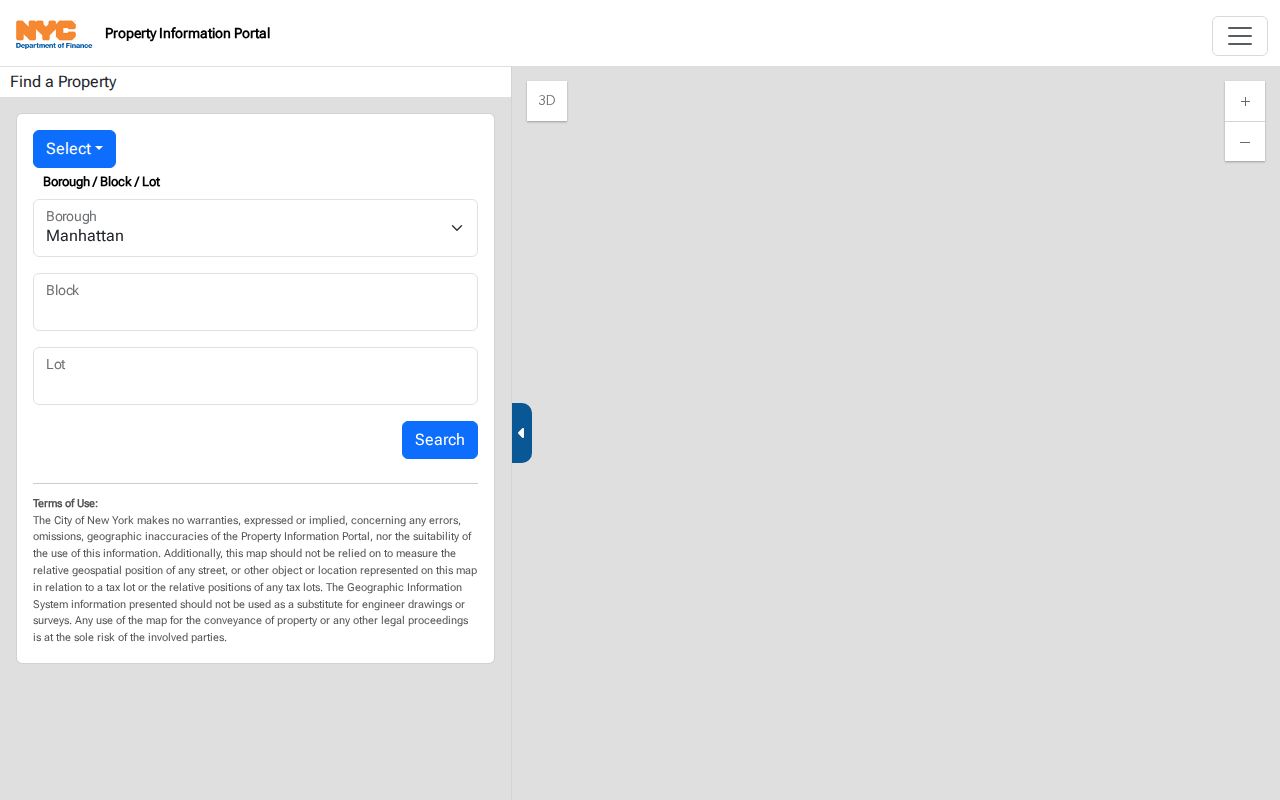
Use the result as a parcel reference, then compare the date and source before drawing a conclusion about a current household.
New York City Voter Match Rules
The NYC Board of Elections Registered Voter Search is a known-person confirmation tool. It requires first name, last name, birth date, borough, and ZIP Code. It does not offer a street browse or a public citywide resident roster. Entering an incomplete or approximate name is not a substitute for the required identifying fields.
A match confirms only what the public tool displays for the registration query. Full voter-file requests run through the New York State Board of Elections FOIL channel and require an elections-purpose certification under Election Law §3-103(5). Protected and confidential-voter rules can limit access further.
The five-field voter form below makes the exact-match requirement visible.
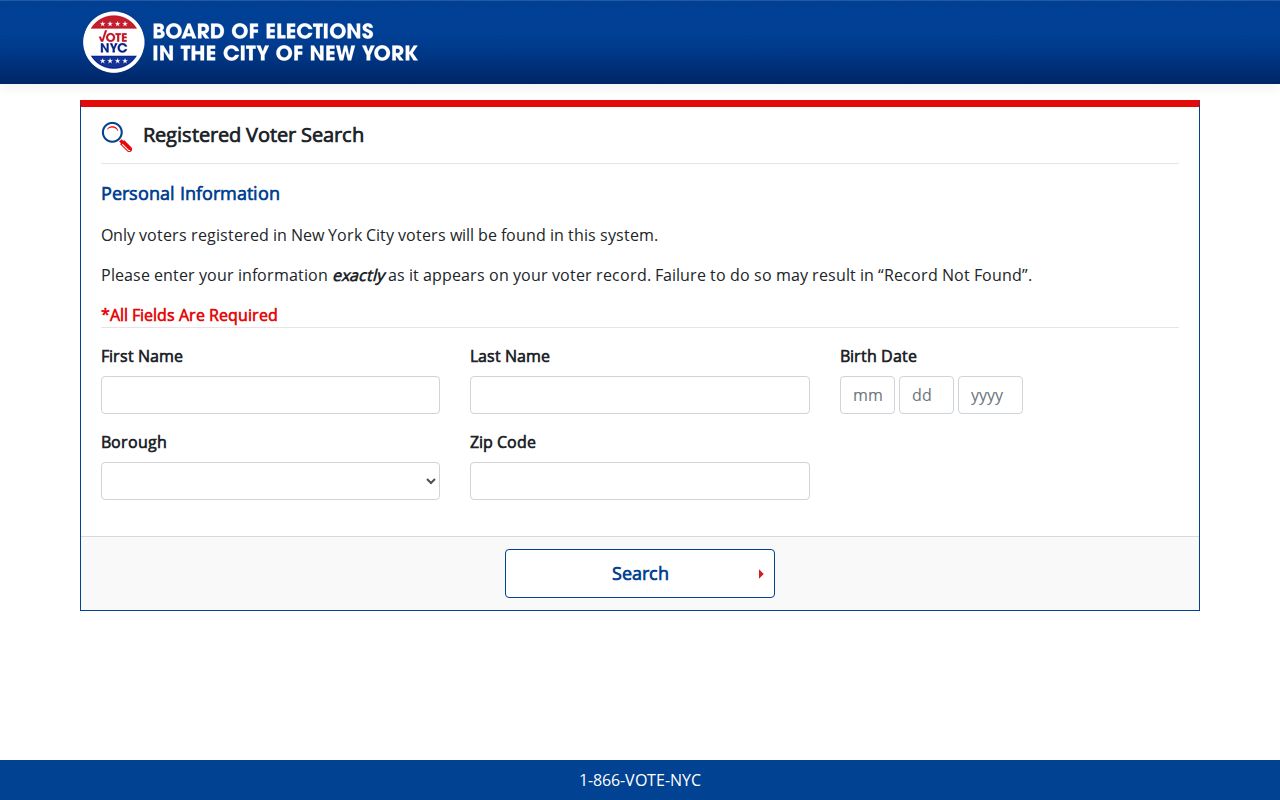
Use a voter result as one dated confirmation point, then corroborate it with the type of record that fits the question.
New York City Court and Estate Names
New York State eCourts combines separate public products, including WebCivil Local, WebCivil Supreme, WebCrims, WebFamily, NYSCEF Guest Search, and WebSurrogate. Their search fields and visibility differ. A public case result can show a caption, party role, court, number, status, dates, and sometimes eligible document links. It is not a complete biography or proof of current address.
WebSurrogate is useful for a decedent or estate because it offers party-and-date-of-death, file-number, old-index, index-book, and will searches. Older and restricted materials may require the relevant Surrogate’s Court. Family, adoption, juvenile, sealed, and protected records have separate access limits. For federal cases, PACER is the route for the Southern and Eastern Districts of New York.
The eCourts gateway shows the separate public services.
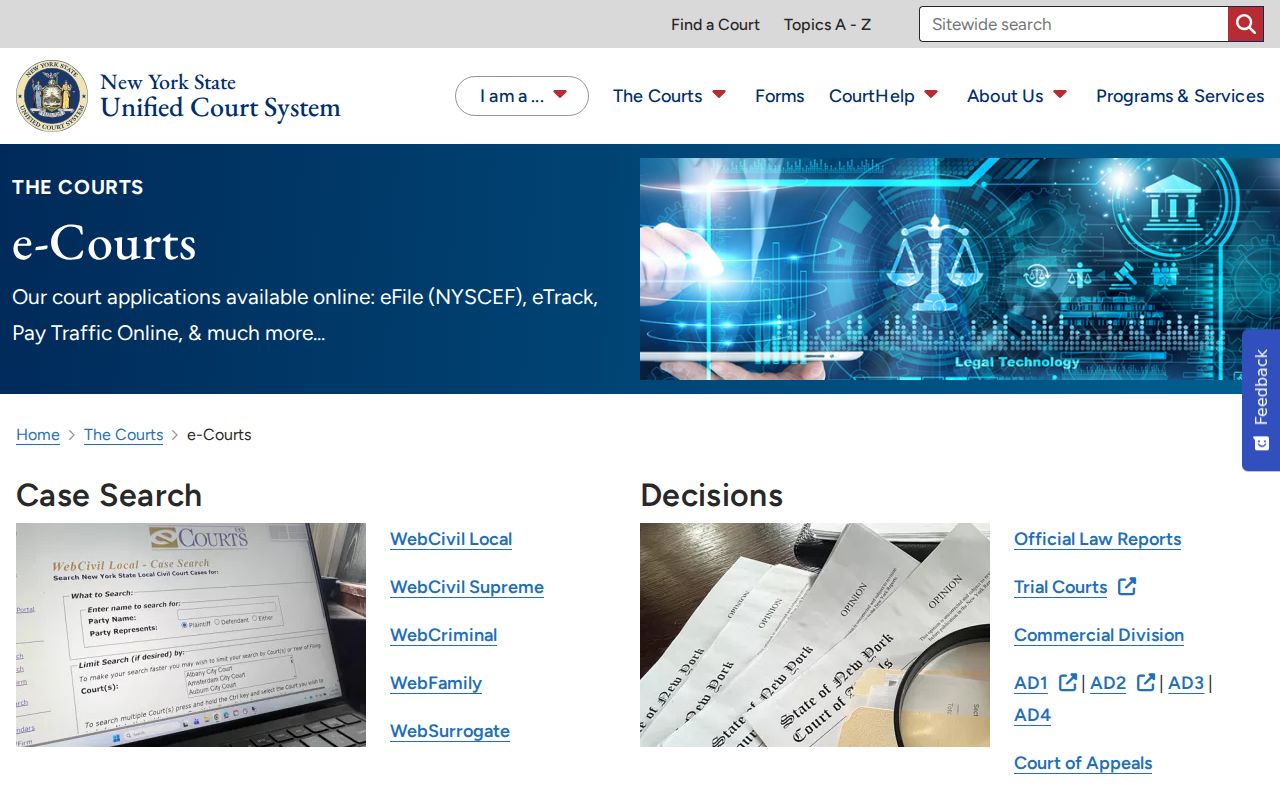
When an online result is insufficient, name the court, file number, and record sought in a focused clerk request.
Current New York City Resident Sources
Current sources each answer a narrow question. Property data ties a parcel to owner-of-record and tax context. ACRIS ties a BBL or party to a recorded instrument. Court products identify public case activity. The voter tool verifies a tightly specified registration match. Building systems such as BIS, DOB NOW, and HPD document property events and registered parties, not a resident list.
| Source | Best use | Online route | Fallback |
|---|---|---|---|
| DOF property record | Address, BBL, tax and owner context | Address or BBL search | Department of Finance assistance |
| ACRIS | Recorded deed, mortgage, lien, or party trail | Four boroughs from 1966 | City Register office; Richmond County Clerk for Staten Island |
| NYC BOE match | Known-person registration confirmation | All five fields required | NYS BOE FOIL with elections-purpose certification |
| eCourts and WebSurrogate | Public case or estate index | Product-specific searches | County clerk or Surrogate’s Court |
| BIS, DOB NOW, HPD | Address-keyed building filings and events | Free public portals | Agency records request or borough-office route |
Newer DOB filings do not appear in BIS, so a complete building-history search uses both BIS and DOB NOW. Plans are not public in the DOB NOW portal; the documented fallback is the Department of Buildings record-request route and, where available, borough-office pickup.
New York City Historical Vital Indexes
The Historical Vital Records portal provides browse and search paths for historic NYC births, deaths, and marriages. Its name search uses certificate type, last name, optional first name, borough, and year. Historic births are generally before 1910, deaths before 1951, and marriages before 1950 at the Municipal Archives, although borough and series rules matter.
Current certificates are a different channel. NYC Department of Health and Mental Hygiene controls current birth and death certificates with identity and eligibility requirements, while the City Clerk handles marriage records from 1950 forward. A digitized historical image, a certified historical copy, and a current certificate have different access rules. When a desired item is not digitized, the Municipal Archives order route, mail option, and 31 Chambers Street appointment are documented fallbacks.
New York City ACRIS Document Trails
ACRIS is the main recorded-property index for Manhattan, Brooklyn, Queens, and the Bronx. Its search menu includes party name, parcel identifier, document type, document ID or City Register File Number, transaction number, reel and page, and UCC or federal-lien file number. Address-to-BBL lookup is a useful first step because a legal description may not use the street number printed today.
A detail can include party names and roles, document type, document and recording dates, CRFN, amount where relevant, parcel information, references, and an image link. Follow a deed trail by checking whether the parcel or unit is the same, then search the earlier seller as a buyer in an earlier date range. Mortgages, easements, partial interests, and entity signatures need their own interpretation.
The ACRIS entry screen below leads to property-record and address-parcel options.
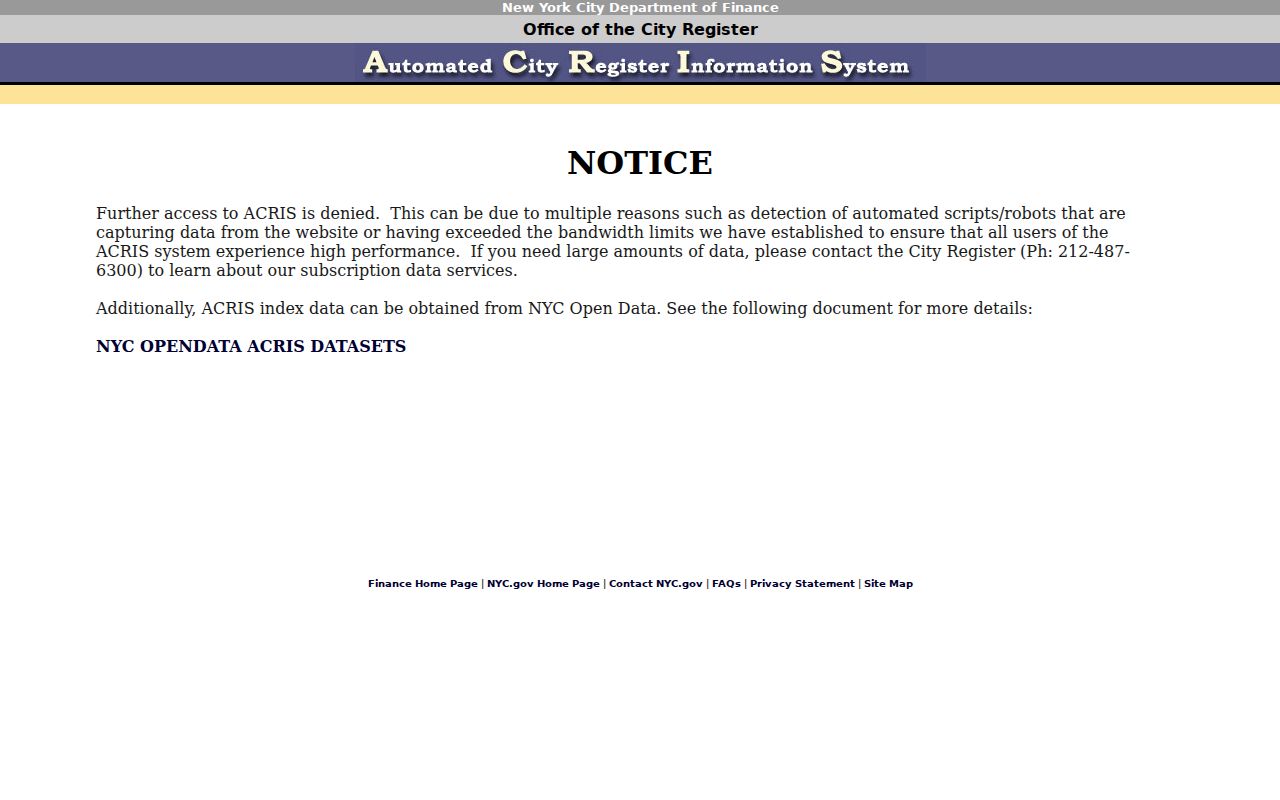
The image highlights why the address and parcel step should happen before a party-name search.
New York City Historical Resident Directories
For past households, the shelves are as important as the web portal. NYPL’s New York City directory collection spans 1786–1934, with free digitized emphasis from 1786 to 1922/23 and additional print or microfilm holdings. The Center for Brooklyn History and Brooklyn Public Library supply Brooklyn runs, reverse books, telephone volumes, and address directories. The New York City Directory Book explains those collections and their entry conventions in depth.
Entries can hold a name, initials, home marker, occupation, business location, or widow notation. They must be read in their publication year. Pair an address-directory entry with a census, tax photo, map, obituary, probate file, or deed rather than carrying a historic entry into the present.
- Index
- A searchable list pointing to records, not the record image or certified original itself.
- Criss-cross directory
- An address-ordered directory that can help identify historical occupants of a street or building.
- Parcel
- A tax or legal land unit identified in New York City by a borough, block, and lot.
New York City Archive Fallbacks
When a portal ends, switch to the custodian that holds the next layer. Municipal Archives staff can direct researchers to finding aids, property cards, tax photographs, maps, old-town records, historic vital material, and collection guides. NYPL and Brooklyn Public Library provide different directory, newspaper, map, and microfilm runs. A county clerk or court counter handles a specific judicial file. A focused FOIL request addresses administrative agency records, not a court file.
The city’s record history is layered. The 1898 consolidation, Bronx annexations, and the 1899 Queens split mean older records can use former town names. The lost federal 1890 census has a local supplement in the address-organized Manhattan Police Census. Keep the printed locality, year, and collection reference in a research log instead of silently converting an old label to a modern one.
Note: The most useful fallback request names the borough, record type, date range, address or BBL, and the exact copy or search sought.
New York City Digitization Updates
DORIS is continuing to add and correct historical material rather than treating digitization as a finished project. The Historical Vital Records effort targets 13.3 million records and displayed 10,357,808 digitized records at inspection. In 2025, the project added marriage licenses and corrected Kings and Manhattan death certificates. A prior no-result can merit a later, careful repeat search.
Recent DORIS work also includes transcription and electronic-records projects, with 1890 Manhattan Police Census volumes among the collections published to a crowd-sourced transcription platform. These additions can improve an older resident trail, but the source’s own date and coverage statement still controls what a result proves.
New York City Resident Search Limits
Official rolls and commercial people-finding products do not solve the same problem. Official systems show a defined record with a keeper, date, and access rule. Commercial compilations can merge stale or unrelated entries and may lack the source context needed to resolve a common name. A person’s privacy protections, confidential-voter status, or ACP substitute address must be respected.
| Approach | Strength | Limit |
|---|---|---|
| Official record or index | Identifies custodian, date, and record type | May be incomplete, restricted, or available only at a counter |
| Historic library collection | Places a household in a documented period | Does not establish a current address |
| Commercial compiled result | May suggest a lead to verify | Can be stale, merged, or missing source context |
The New York City deed-fraud guidance explains the official alert route and the four-borough ACRIS distinction.
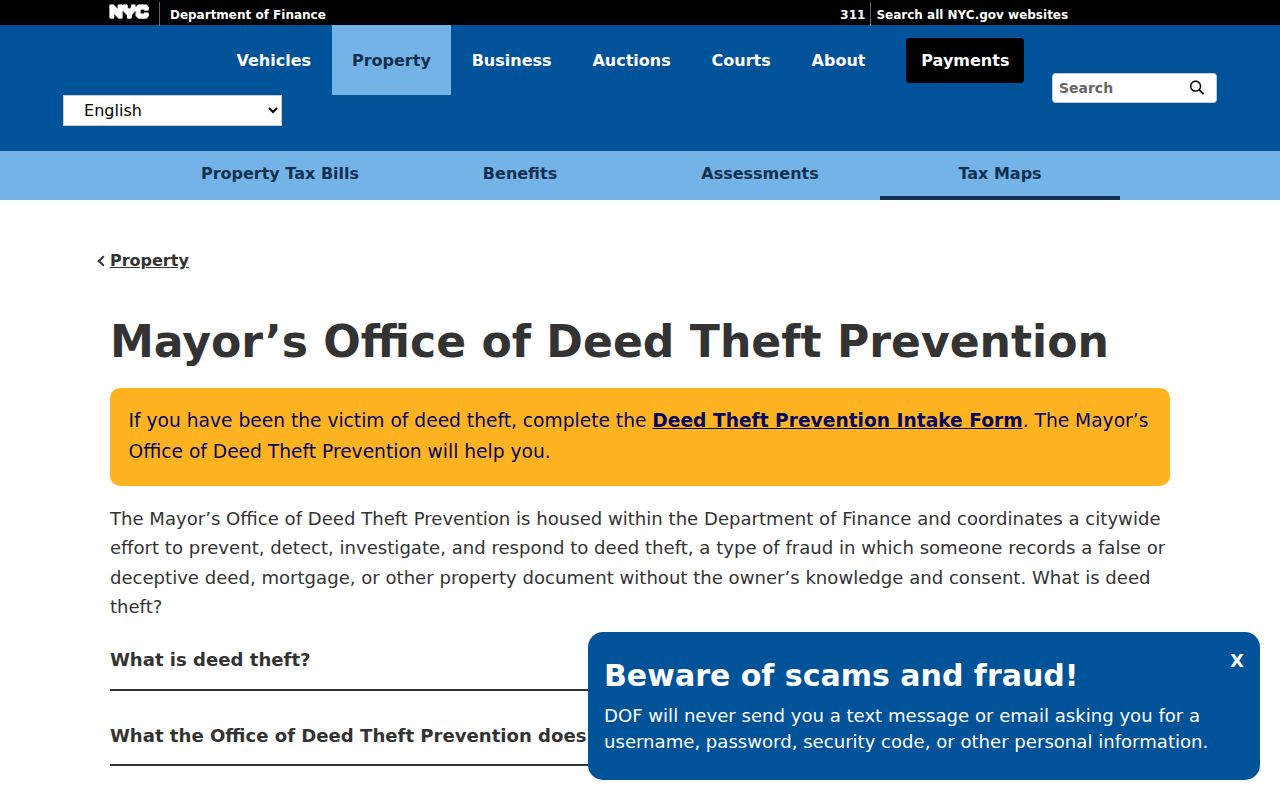
The alert program is a property-protection tool, not a substitute for verifying a recorded document with the relevant custodian.
New York’s Address Confidentiality Program provides substitute-address protection for eligible participants. Public records are for lawful personal research, family history, estate matters, and civic understanding, never for surveillance, harassment, intimidation, or harm.