
Locate New York City Residents
No citywide roster of New York City residents exists. Every search starts from what is already known. That could be a full name, a borough, a street address, a date, or a case number. Property tools usually reward an address first. Court and probate indexes fit case-specific questions. Historic city directory volumes and archive collections place a household in an earlier year.
Along any residents directory trail, keep each result tied to its source and date. An owner of record may list a mailing address somewhere else entirely. A recorded party might be an attorney, lender, trustee, or business representative rather than the person sought. Two records that agree beat one name match.
- Write down the borough, street address, unit when known, and approximate date.
- Run the address through the NYC Property Information Portal to find the borough, block, and lot, known as the BBL.
- Use that BBL in ACRIS for recorded documents in Manhattan, the Bronx, Brooklyn, or Queens.
- For a named person, compare the relevant public record with a second source such as a court index, historic vital index, or directory volume.
- When a record is older, missing online, or needs certification, contact the custodian rather than treating a web result as final.
Note: A careful record trail keeps the address, the owner, the occupant, and a recorded party separate. It never treats them as one person.
New York City Resident Records Offices
New York City research crosses five county identities at once. Manhattan is New York County. Brooklyn is Kings County. The Bronx, Queens, and Staten Island keep their own county names. City systems can make a residents directory lookup feel citywide, yet land, court, probate, and historic-file routes still shift by borough, so the offices below each cover a different leg of the trail.
Department of Finance
Property Information Portal connects an address or BBL to tax, parcel, and owner-of-record context. It is an address-first tool, not a citywide owner-name search.
City Register and ACRIS
ACRIS indexes recorded property instruments from 1966 forward for Manhattan, Brooklyn, Queens, and the Bronx. Staten Island follows the Richmond County Clerk route.
New York State Courts
eCourts provides several public search products. County clerks and Surrogate’s Courts remain the path for many older or file-specific records.
Municipal Archives
DORIS Municipal Archives at 31 Chambers Street holds historic vital material, tax cards, maps, directories, and other city collections.
The New York Freedom of Information Law, Public Officers Law Article 6, §§84–90, is the route for existing administrative records. The request must describe the record reasonably. The law does not reach judicial case files. For a court file, ask the clerk under Judiciary Law §255 and give the case or index number whenever possible.
New York City Boroughs and BBLs
A BBL is a borough-block-lot number. It is the stable thread connecting an address to Finance details, ACRIS instruments, ZoLa maps, and many building records. Record the borough before you search. The same street name can appear in two boroughs. Older material may use an earlier town name.
Four boroughs use the City Register's online ACRIS path for property instruments from 1966 forward. Staten Island deeds sit with the Richmond County Clerk. Earlier documents in the four ACRIS boroughs route through the City Register business office. This split explains why a complete-looking online result can still need a counter or archive follow-up.
Note: A BBL names a tax parcel, not one dwelling, one entrance, or every person tied to the building.
New York City Property Search Paths
The portal accepts several starting points. An address, a BBL, a borough and block, a condominium number, a co-op development number, a REUC identifier, an air lot, or a subterranean lot all work. A property detail can show owner-of-record information, tax class, values, exemptions, bills, building and land descriptions, and recent recording links. Anchoring the address here pays off before any name-based index opens.
The Property Information Portal start screen lays out the search choices below. A mailing address is an administrative contact. It never proves the owner lives at the parcel. That gap matters most for trusts, management offices, condominium units, and entity-owned property. Treat each detail as a parcel anchor.
| Property search field | Input | What it reaches |
|---|---|---|
| Address | Street address, intersection, or place name | Property detail and map context |
| Borough / Block / Lot | Borough selector plus block and lot | A specific tax parcel |
| Borough / Block | Borough selector plus block | A block-level set of parcels |
| Condominium or co-op number | Borough plus the listed number | Development-level property route |
| Air or subterranean lot | Borough, block, and lot details | Special tax-lot records |
This Property Information Portal view opens the parcel search. It turns an address into the details the next record system needs.
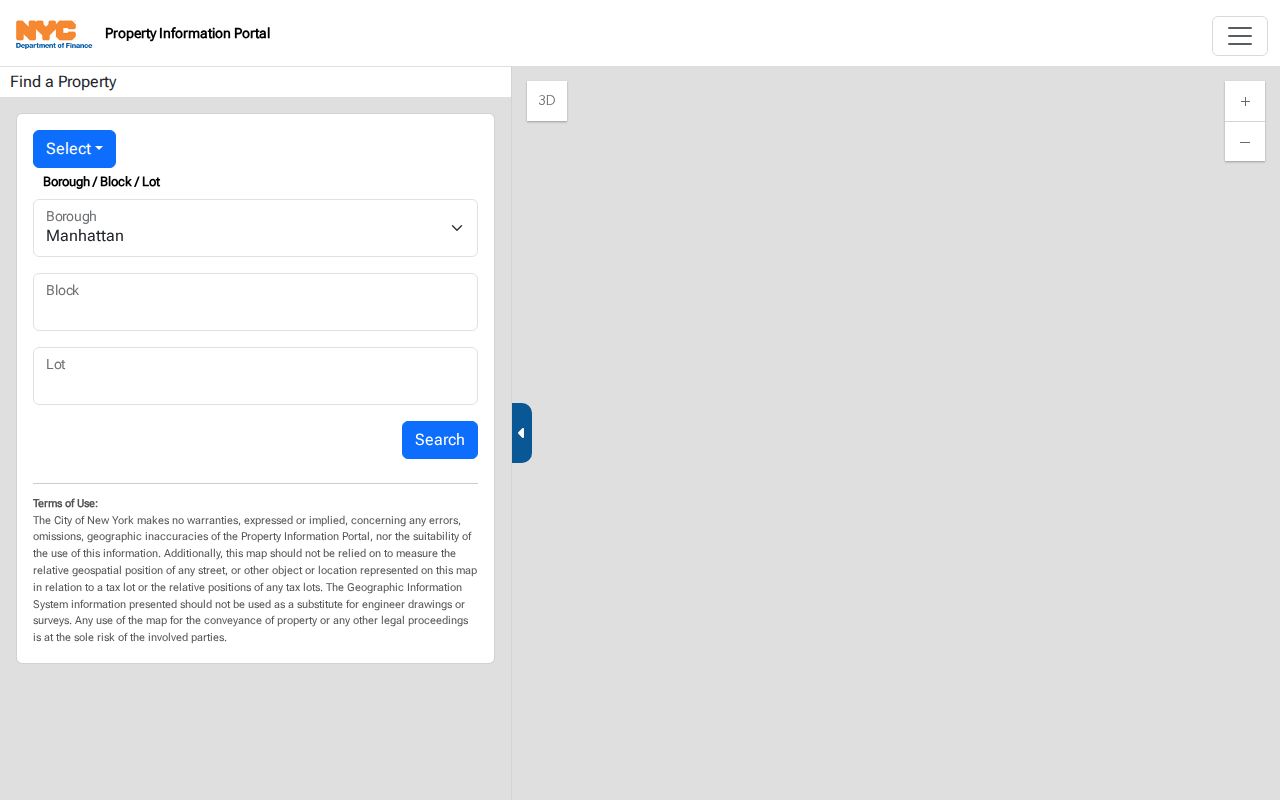
Treat the result as a parcel reference. Compare date and source before concluding anything about a current household.
New York City Voter Match Rules
The NYC Board of Elections Registered Voter Search checks one known person. It requires first name, last name, birth date, borough, and ZIP Code. There is no street browse and no public roster. Approximate names cannot substitute for those fields.
A match shows only what the tool displays. For the full voter file, requests run through the New York State Board of Elections FOIL channel, with an elections-purpose certification under Election Law §3-103(5). Protected and confidential-voter rules can also limit access.
The five-field voter form below makes the exact-match requirement visible. Every field must be exact.
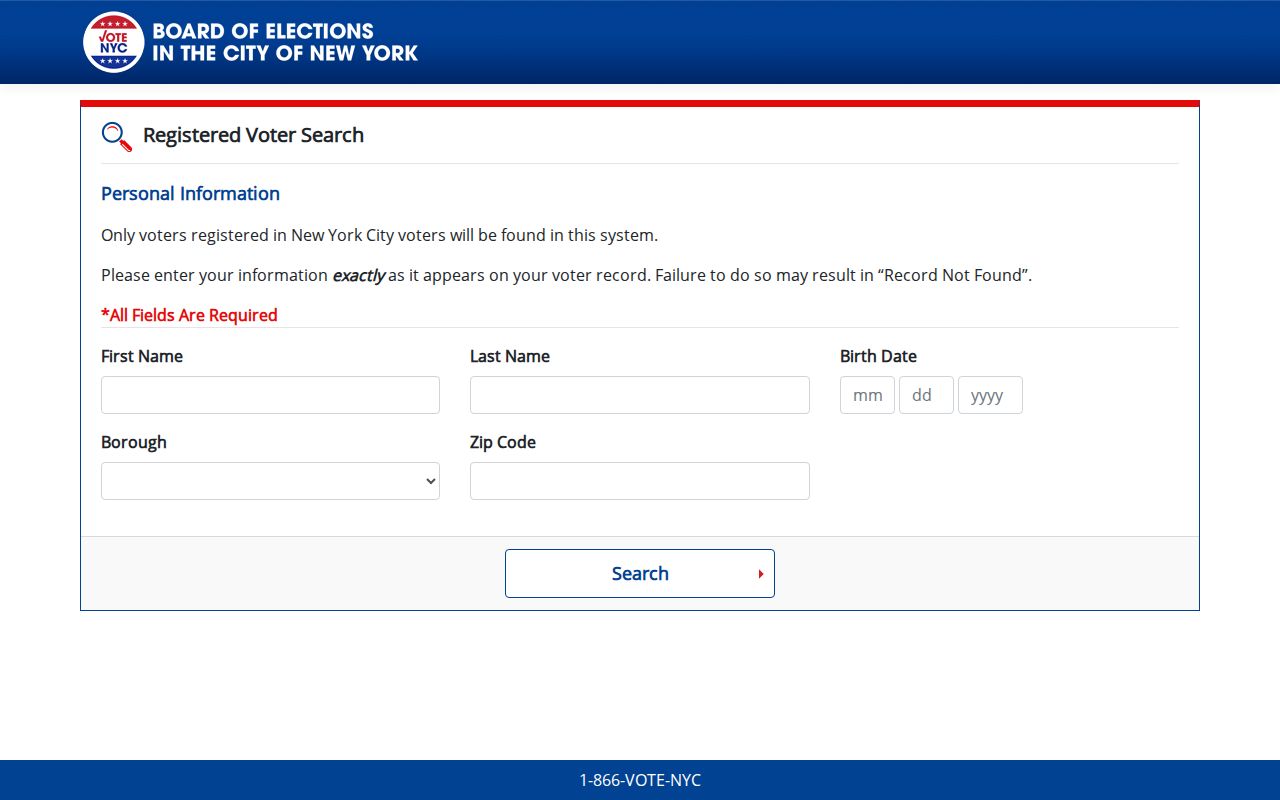
Treat the voter result as one dated confirmation. Then corroborate it with the record type that fits the question.
New York City Court and Estate Names
New York State eCourts bundles several public lookup tools under one roof. WebCivil Local, WebCivil Supreme, WebCrims, WebFamily, NYSCEF Guest Search, and WebSurrogate each run separately. Each shows a different slice of case data. A result may list a caption, party roles, the court, a case number, status, dates, and sometimes document links. That is a case record. It is not a biography, and it does not prove where anyone lives now.
For estates, WebSurrogate earns its keep. It searches by party and date of death. File number, old index, index book, and will also work. Older or restricted material still sits with the Surrogate's Court that holds it. Family, adoption, juvenile, and sealed records carry their own access limits. Federal cases skip all of this. They go through PACER for the Southern and Eastern Districts of New York.
The eCourts gateway lists every public service in one place.
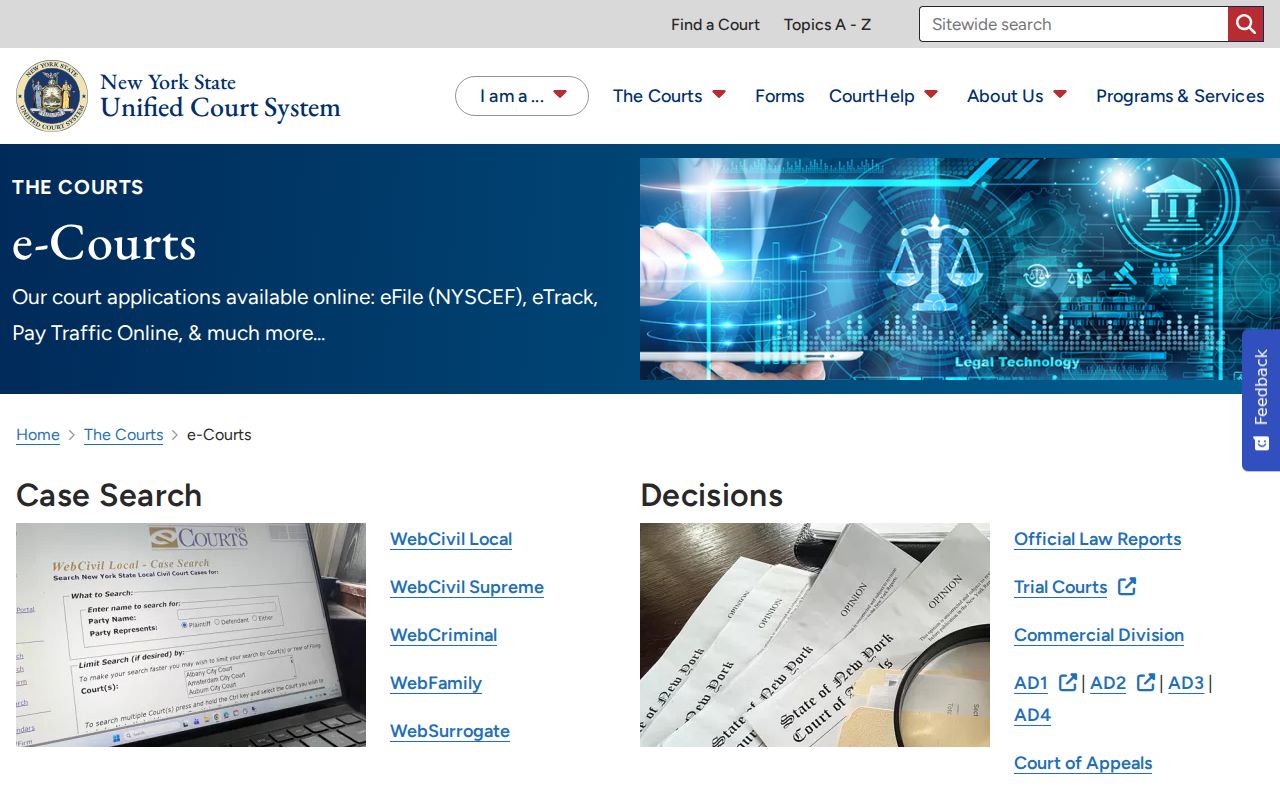
An online result often is not enough. A focused clerk request works best when it names the court, the file number, and the exact record sought.
Current New York City Resident Sources
Each current source answers one narrow question. Property records tie a parcel to its owner of record and tax context. ACRIS links a BBL or a party name to a recorded instrument. Court products flag public case activity. The voter tool confirms only a tightly matched registration. BIS, DOB NOW, and HPD document building events and registered parties. None of them is a resident list.
| Source | Best use | Online route | Fallback |
|---|---|---|---|
| DOF property record | Address, BBL, tax and owner context | Address or BBL search | Department of Finance assistance |
| ACRIS | Recorded deed, mortgage, lien, or party trail | Four boroughs from 1966 | City Register office; Richmond County Clerk for Staten Island |
| NYC BOE match | Known-person registration confirmation | All five fields required | NYS BOE FOIL with elections-purpose certification |
| eCourts and WebSurrogate | Public case or estate index | Product-specific searches | County clerk or Surrogate’s Court |
| BIS, DOB NOW, HPD | Address-keyed building filings and events | Free public portals | Agency records request or borough-office route |
One gap trips up many searchers. Newer DOB filings never appear in BIS, so a full building history needs both systems. Plans stay out of the public DOB NOW portal too. The fallback is a Department of Buildings record request. Borough-office pickup is offered where available.
New York City Historical Vital Indexes
The Historical Vital Records portal opens both browse and search paths into old NYC births, deaths, and marriages. Its name search takes certificate type, last name, an optional first name, borough, and year. Coverage has rough edges, and borough rules matter. Historic births generally run before 1910. Deaths generally run before 1951, and marriages before 1950 at the Municipal Archives.
Anything newer follows a different channel. The Department of Health and Mental Hygiene holds current birth and death certificates behind identity and eligibility rules. The City Clerk keeps marriage records from 1950 forward. A digitized image, a certified historical copy, and a current certificate each carry their own access terms. Some items have not been digitized. The Municipal Archives order route, mail, and a 31 Chambers Street appointment are the documented fallbacks.
New York City ACRIS Document Trails
ACRIS anchors recorded-property research for Manhattan, Brooklyn, Queens, and the Bronx. Its search menu is broad. Look up a party name, parcel identifier, document type, or document ID. A City Register File Number works too. So does a transaction number, reel and page, or a UCC and federal-lien file number. Start with an address-to-BBL lookup. A legal description may not use the street number you know today.
A record detail can carry party names and roles. It may list document type, recording and document dates, the CRFN, an amount where relevant, parcel data, cross-references, and an image link. To trace a deed trail, confirm the parcel or unit matches. Then hunt the earlier seller as a buyer in an earlier date range. Mortgages, easements, partial interests, and entity signatures each need their own reading.
The ACRIS entry screen offers property-record and address-parcel options.
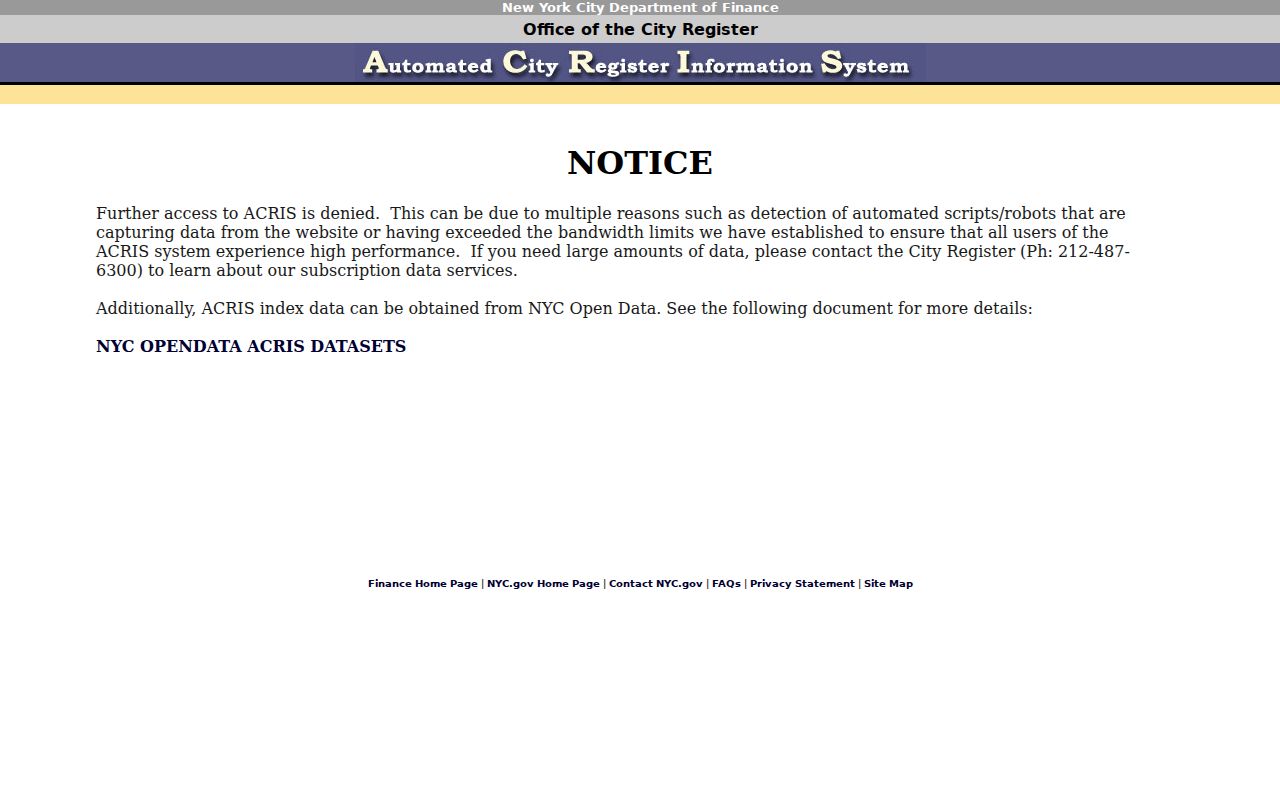
The image shows why the address and parcel step should come before any party-name search.
New York City Historical Resident Directories
For past households, library shelves rival any web portal. NYPL's New York City directory collection spans 1786 through 1934. Free digitized runs are concentrated from 1786 to 1922/23, alongside print and microfilm holdings. Brooklyn coverage comes from the Center for Brooklyn History and Brooklyn Public Library. Holdings include reverse books, telephone volumes, and address directories. The New York City Directory Book walks through those collections and their entry conventions.
A single entry may hold a name, initials, a home marker, an occupation, or a widow notation. It may also list a business location. Read it in its publication year. Pair an address-directory entry with a census, tax photo, map, obituary, probate file, or deed. Never carry a historic entry straight into the present.
- Index
- A searchable list pointing to records, not the record image or certified original itself.
- Criss-cross directory
- An address-ordered directory that can help identify historical occupants of a street or building.
- Parcel
- A tax or legal land unit identified in New York City by a borough, block, and lot.
New York City Archive Fallbacks
When a portal dead-ends, move to the custodian holding the next layer. Municipal Archives staff point researchers to finding aids. Property cards, tax photographs, maps, old-town records, historic vital material, and collection guides round out the holdings there. NYPL and Brooklyn Public Library hold different directory, newspaper, map, and microfilm runs. A county clerk or court counter serves a specific judicial file. A focused FOIL request reaches administrative agency records, never a court file.
The record history itself is layered. Consolidation in 1898 and the Bronx annexations changed many boundaries. The 1899 Queens split did the same. Older records can carry former town names. The lost federal 1890 census has a local cousin in the address-organized Manhattan Police Census. Log the printed locality, year, and collection reference exactly as found. Resist converting an old label into a modern one.
Note: The strongest fallback request names the borough, record type, date range, address or BBL, and the exact copy or search sought.
New York City Digitization Updates
Digitization at DORIS never really stops. The Historical Vital Records effort aims at 13.3 million records. 10,357,808 of them were already digitized on the public counter. That count keeps climbing. During 2025 the project added marriage licenses. It also fixed errors in the Kings and Manhattan death certificates. A search that came up empty a year ago can be worth a careful second try.
Other work is moving too. Transcription and electronic-records projects are underway. Volumes of the 1890 Manhattan Police Census now sit on a crowd-sourced transcription platform where volunteers index them page by page. These additions can strengthen an older resident trail. Still, the coverage statement that DORIS itself publishes for each collection decides what any single result actually proves.
New York City Resident Search Limits
A residents directory built on official rolls answers a different question than a commercial people-finder does. Official records come with a keeper. Each voter roll or property roll carries a date, a custodian, and a rule for access. So you know exactly what you are reading. Commercial compilations blend stale entries with unrelated ones. A common name can collapse into a single mistaken profile. Confidential-voter status and ACP substitute addresses deserve respect in any resident lookup, whatever the source.
| Approach | Strength | Limit |
|---|---|---|
| Official record or index | Identifies custodian, date, and record type | May be incomplete, restricted, or available only at a counter |
| Historic library collection | Places a household in a documented period | Does not establish a current address |
| Commercial compiled result | May suggest a lead to verify | Can be stale, merged, or missing source context |
For protecting a deed, New York City deed-fraud guidance from the Department of Finance lays out the alert program and how ACRIS covers the four recording boroughs.
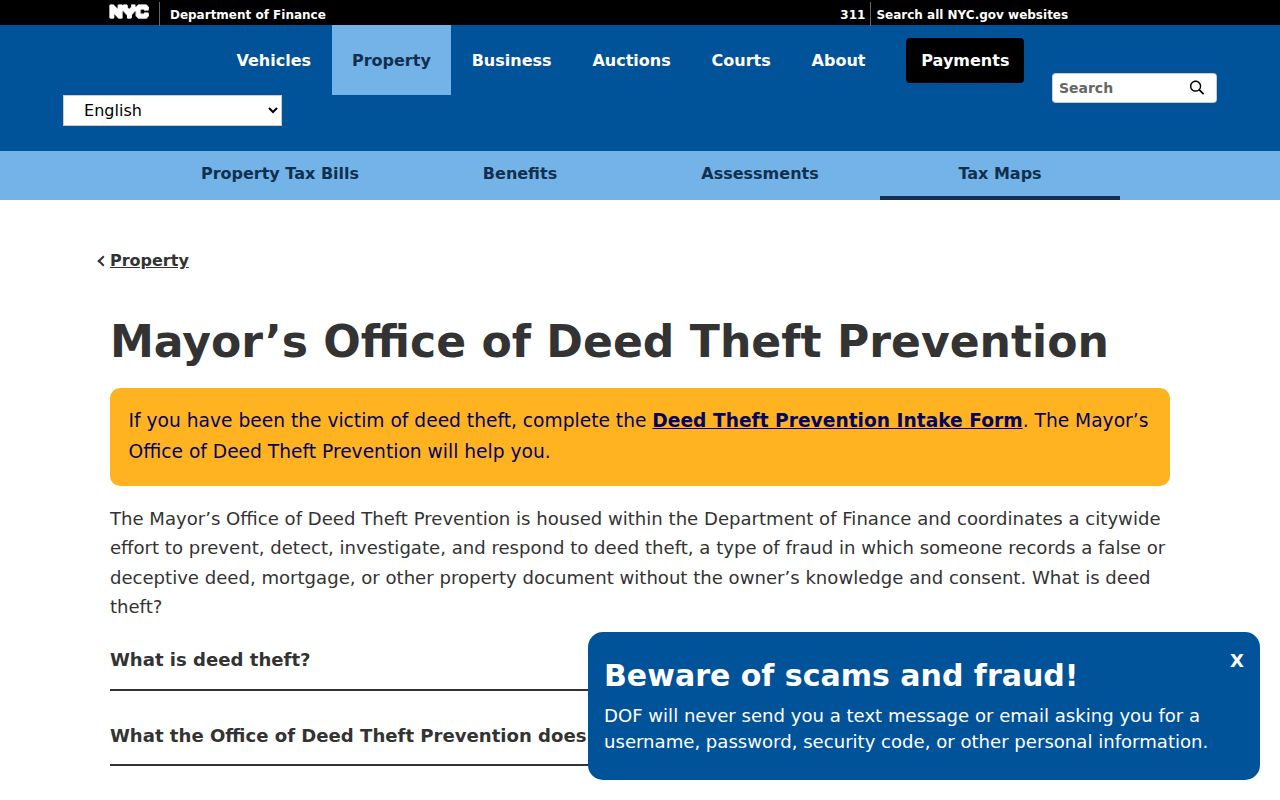
The alert program guards property. Yet it cannot replace confirming a recorded document with the custodian who holds it. New York also runs an Address Confidentiality Program. It gives eligible participants a substitute address in public records. These tools balance access with safety. Residents directory records and other public files serve lawful aims like family history, estate work, and civic understanding. They never serve surveillance, harassment, intimidation, or harm.