
New York City Previous Residents Sources
Past residents leave different kinds of records at different times. Begin with the borough, street address, unit if relevant, and the borough-block-lot, or BBL. Then decide whether the question concerns title, the physical building, or the people listed at the address. The table distinguishes those trails. It also shows why an owner appearing in a document is not automatically the person who occupied the address.
| Source | Years It Covers | Where Held | What It Shows |
|---|---|---|---|
| ACRIS recorded instruments | 1966-present, Manhattan, Bronx, Brooklyn, Queens | NYC City Register / ACRIS | Deeds, mortgages, parties, dates, CRFN, legal references, and available images. |
| Richmond County land records | Confirm current online and counter coverage | Richmond County Clerk | Staten Island conveyances, mortgages, legal descriptions, and county-clerk instruments. |
| Tax cards and photographs | 1939-1941 photos; Queens cards circa 1926-1991, bulk 1939-1975 | Municipal Archives | Lot, building, assessment, conveyance notes, diagrams, and physical structure images. |
| NYPL city directories | 1786-1934, digital emphasis 1786-1922/23 | NYPL Digital Collections and Milstein | Name, address, occupation, street, and business snapshots. |
| Brooklyn directories | 1796-1967; criss-cross runs through 1986 | Center for Brooklyn History / BPL | Brooklyn names, home or work addresses, and by-address entries. |
| Sanborn and property atlases | NYPL Digital Sanborn 1867-1970 | NYPL and Library of Congress | Footprint, stories, use, lot and street context, and neighborhood change. |
Online ACRIS is the first stop for four boroughs after 1965. Before that cutoff, go to the City Register business office for the borough where the document was recorded. Staten Island has a different land-record route through the Richmond County Clerk. For older material, Municipal Archives, NYPL, and BPL supply research-room, appointment, print, microfilm, and digitized access rather than a single citywide history portal.
New York City Previous Residents BBLs
Anchor a backward search to today's BBL before searching names. The Department of Finance property systems accept an address, BBL, borough-block, condominium, co-op development, REUC, air-lot, or subterranean-lot route. The result can supply current property and tax context, owner or owner-of-record information, lot and building descriptions, and recent-recording links. Save the borough, block, lot, unit, source page, and date accessed in a research log.
ACRIS Find Addresses and Parcels provides the city address-to-BBL and BBL-to-address bridge.
A BBL gives the deed and map searches a stable parcel key when a street number changed, a building has several entrances, or an old source used a different address form.
A situs address identifies the location of the parcel. A mailing address identifies where notices go. Mailing information can point to an owner, representative, management office, or another property, so it is not proof that the recipient lived at the address. The same caution applies to a recorded party.
Note: Record both the parcel's situs address and each source's mailing address without treating either as an occupancy statement.
New York City Previous Residents Deed Trail
For title history, use the BBL to open the most recent conveyance in ACRIS, then read the instrument instead of relying only on a search-result line. A grantor is the party transferring an interest. A grantee is the party receiving it. A chain of title is the dated sequence of recorded transfers for the same parcel or unit. Legal description means the lot, block, unit, or related description that identifies the recorded property more reliably than a street number alone.
The ACRIS search menu offers Party Name, Parcel Identifier, Document Type, Document ID or CRFN, Transaction Number, Reel and Page, and UCC or federal-lien modes.
The menu is the entry point to the four-borough recorded index, not proof that every name on an instrument was an occupant.
- Open the latest deed for the BBL and note its grantee, grantor, execution and recording dates, CRFN, legal description, and any prior-document reference.
- Confirm that the legal description identifies the same parcel or unit, especially with condominiums, partial interests, air lots, or merged lots.
- Search the recorded grantor as a grantee in an earlier date range, then compare the BBL and description again.
- Follow cited deeds, assignments, subdivision records, or condominium declarations by CRFN or document reference.
- At the online cutoff, use the relevant City Register office; for Staten Island, use the Richmond County Clerk and confirm its current counter, mail, or online procedure.
A mortgage can date financing without changing ownership. Trusts, corporations, and LLCs require an exact entity-name search, and a party may be a trustee, lender, attorney, officer, or representative. Keep each relationship and date distinct.
Manhattan Previous Residents Records
Manhattan historical title work has a useful local bridge. From 1911 through 1916, more than 630,000 pre-1891 conveyances were abstracted into chronological key-block material. The resulting index opened in 1917. That history explains why an older Manhattan transfer may be organized through a numbered key block and older legal description rather than the modern BBL vocabulary.
Use the key-block material as a continuity aid, then compare it with the instrument, parcel description, map, and later address evidence. New York City's modern five-borough form dates from 1898, so older locality labels can name a former town or a different county context. The borough remains an essential part of every search note.
Note: A historical title sequence can establish recorded transfers without identifying every person who lived in the building.
New York City Previous Residents Maps
Maps and tax records test whether an older address refers to the same physical place. Compare the tax photograph, tax-card site diagram, Sanborn footprint, building class, story count, permit events, and nearest cross streets. A demolished structure, renumbered street, lot merger, newly created condominium, or replacement building can otherwise create a false match between an old directory and a current parcel.
NYPL's fire, topographical, and property-map guide points researchers to Perris, Hyde, Hopkins, Bromley, and Sanborn atlases.
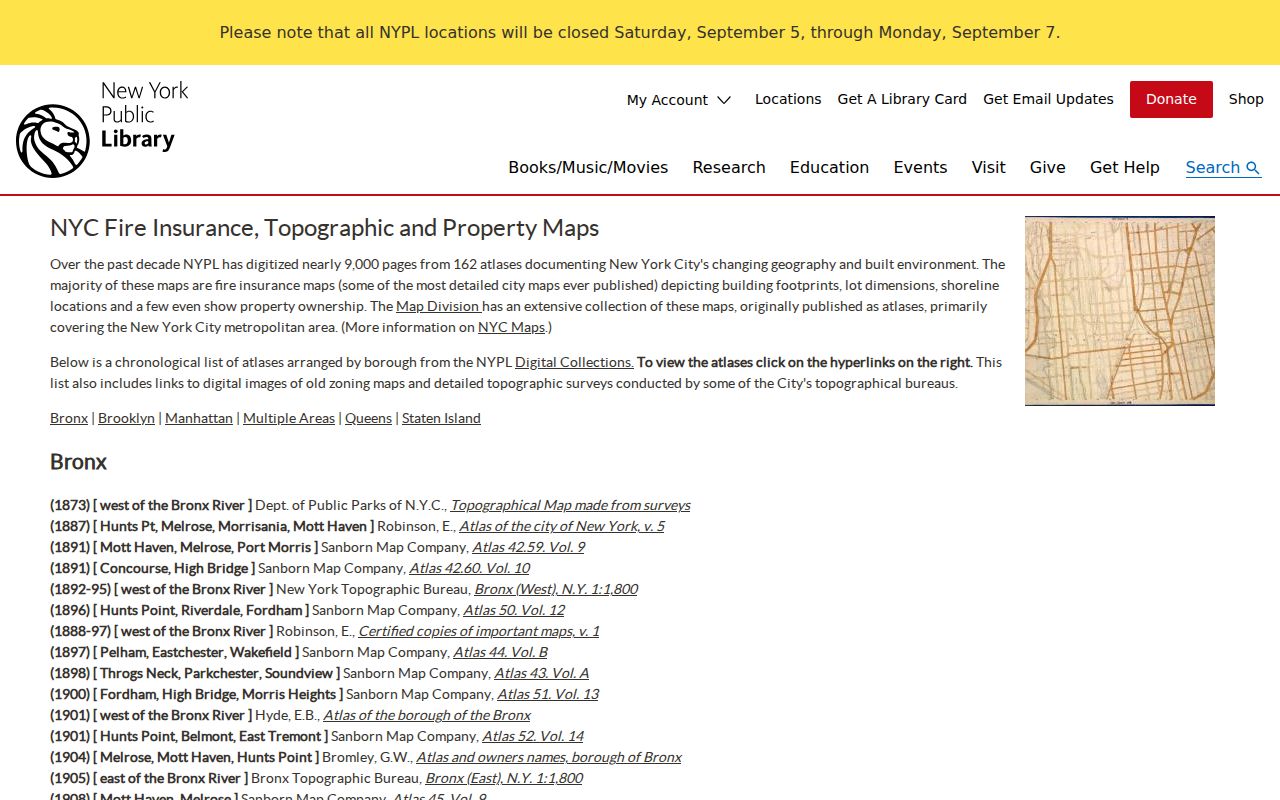
The guide helps place a building in its map era, while the record trail still needs the address and parcel evidence for that period.
The citywide 1939-1941 tax photographs are date-specific images of structures, not occupant lists. Queens tax cards are especially rich: the collection is circa 1926-1991, with most material from 1939-1975, and can combine BBL, assessments, conveyance or mortgage notes, restrictions, easements, diagrams, and a photograph. Municipal Archives staff can direct researchers to cards, maps, photographs, blueprints, and collection guides; request a finding aid or collection identifier before a visit. The Archives research rooms at 31 Chambers Street have public research hours from 9:00 a.m. to noon and 1:00 to 4:00 p.m.; request an appointment through research@records.nyc.gov, or familyhistory@records.nyc.gov for family-history questions.
Brooklyn Previous Residents by Address
Directory evidence is the household track, distinct from title. NYPL's city-directory collection spans 1786-1934, with free digital emphasis through 1786-1922/23 and print or microfilm holdings afterward. A normal entry can include a surname, initials, occupation, home marker, work address, spouse or widow notation, and an address. Its absence does not prove that a building was vacant.
NYPL's digitized New York City directories make it possible to browse or search individual historic volumes.
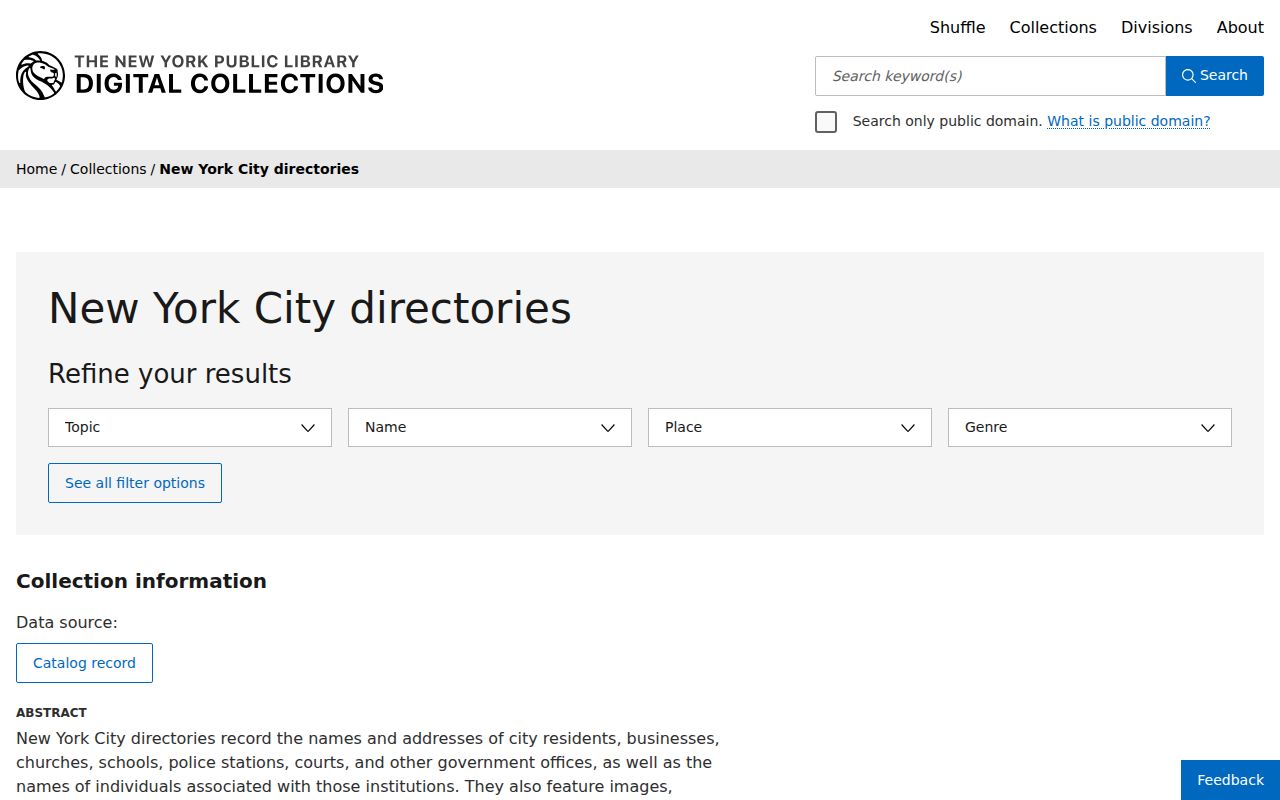
Digital access is one route; Milstein print and microfilm help fill gaps where a particular volume is not available online.
Brooklyn is particularly useful for reverse, or criss-cross, work because the Center for Brooklyn History lists address-book runs for 1929-1931, 1933-1961, 1963-1970, 1972-1980, and 1986. The same collection has Brooklyn directories from 1796-1967 and appointment-based access for 1796-1949, with later directories at BPL's Central Library.
The Center for Brooklyn History research guide identifies those directory, microfilm, and appointment paths.
By-address volumes are valuable because they test an address directly, rather than assuming an alphabetical name listing represents the entire household.
Note: A missing directory entry can reflect an unavailable volume, abbreviated name, address change, or publisher practice.
New York City Previous Residents Household Trail
Pair a directory year immediately before and after a deed, tax photograph, or building event. Record the printed spelling, home marker, occupation, spouse or widow notation, room or unit, publisher, volume, page, and access form. Then compare the same address in the reverse directory where one exists. The underlying collections and entry conventions are described on the New York City city directory page.
- Normalize the borough, street, unit, historical street name, and likely BBL or ward.
- Check the target address in the nearest available address book, then search the adjacent available years.
- Pair the address evidence with the federal census, which is publicly released through 1950 under the 72-year rule.
- For Manhattan in 1890, consult the address-organized Police Census through the Municipal Archives rather than relying on the unavailable federal schedule.
- Use obituary, historic vital-index, probate, newspaper, and property evidence as separate dated confirmation, not as one merged story.
NYPL and BPL newspaper holdings, Municipal Archives historic records, and WebSurrogate can serve as end-of-trail channels when a death or estate is part of the question. Library databases may require an onsite terminal or library-card access, while older probate images can require courthouse review. Cite the original page or image and the date range searched.
New York City Previous Residents Limits
Current owner is not necessarily current occupant, and a historic directory entry is not proof of every person in a household. A tax card is a tax record. A map is a building and parcel source. A recorded deed is evidence of a recorded transaction. Keeping source type and date visible is the best safeguard against turning a house-history search into a claim about living people.
Lawful use. Research previous residents for family history, estate questions, house history, or personal curiosity. Do not use a past address trail to watch, harass, or harm a living person.
For material not digitized, use the custodial route that fits the record: City Register or Richmond County Clerk for land instruments, Municipal Archives research rooms for historic city material, NYPL or BPL for directories and maps, and the relevant court for a specific file. A careful request identifies the borough, BBL, address, date range, record type, and desired format.